
Rigid Dome or Inflatable Bubble: Start with the Structure
A Domevora dome is a rigid solid-polycarbonate shell joined to an aluminium base ring. An inflatable bubble, sold as a bubble tent or plastic bubble tent, a bubble dome, a pop-up bubble tent or simply a clear plastic tent, depends on air pressure maintained by a blower. Both can provide a transparent enclosure, but the operating requirements differ. This comparison concerns Domevora’s published rigid models and blower-supported bubbles; check the actual specification of any competing product.
| Decision | Domevora rigid dome | Blower-supported bubble |
|---|---|---|
| How it stays up | Rigid panels and mechanical connections; no inflation blower | Air pressure; confirm the blower and backup-power requirements |
| Site handling | Published round-model weights are 120–370 kg before platform and fit-out | Obtain the packed weight, anchoring instructions and setup procedure from the supplier |
| Night-time noise | No structural blower; HVAC and ventilation may still make noise | Check blower placement and noise at the sleeping position |
| Indoor comfort | Solid transparent shell; heating, cooling, shade and ventilation need design | Confirm membrane construction and the heating, cooling and air-supply arrangement |
| Weather suitability | Review the selected model, openings, anchors and foundation against local wind and snow requirements | Request operating weather limits and shutdown instructions for the exact product |
| Maintenance | Check compatible cleaners, joints, doors and replacement-panel access | Check membrane cleaning, puncture repairs, blower servicing and replacement-cover availability |
| Warranty | Obtain written terms for the supplied material and configuration | Obtain separate membrane, blower and other component terms |
The Domevora weight range comes from the supplier round-model specification and matches the published collection. It does not establish weights for oval models or finished accommodation units. No universal competing-product wind limit, noise figure or replacement interval is assumed here.
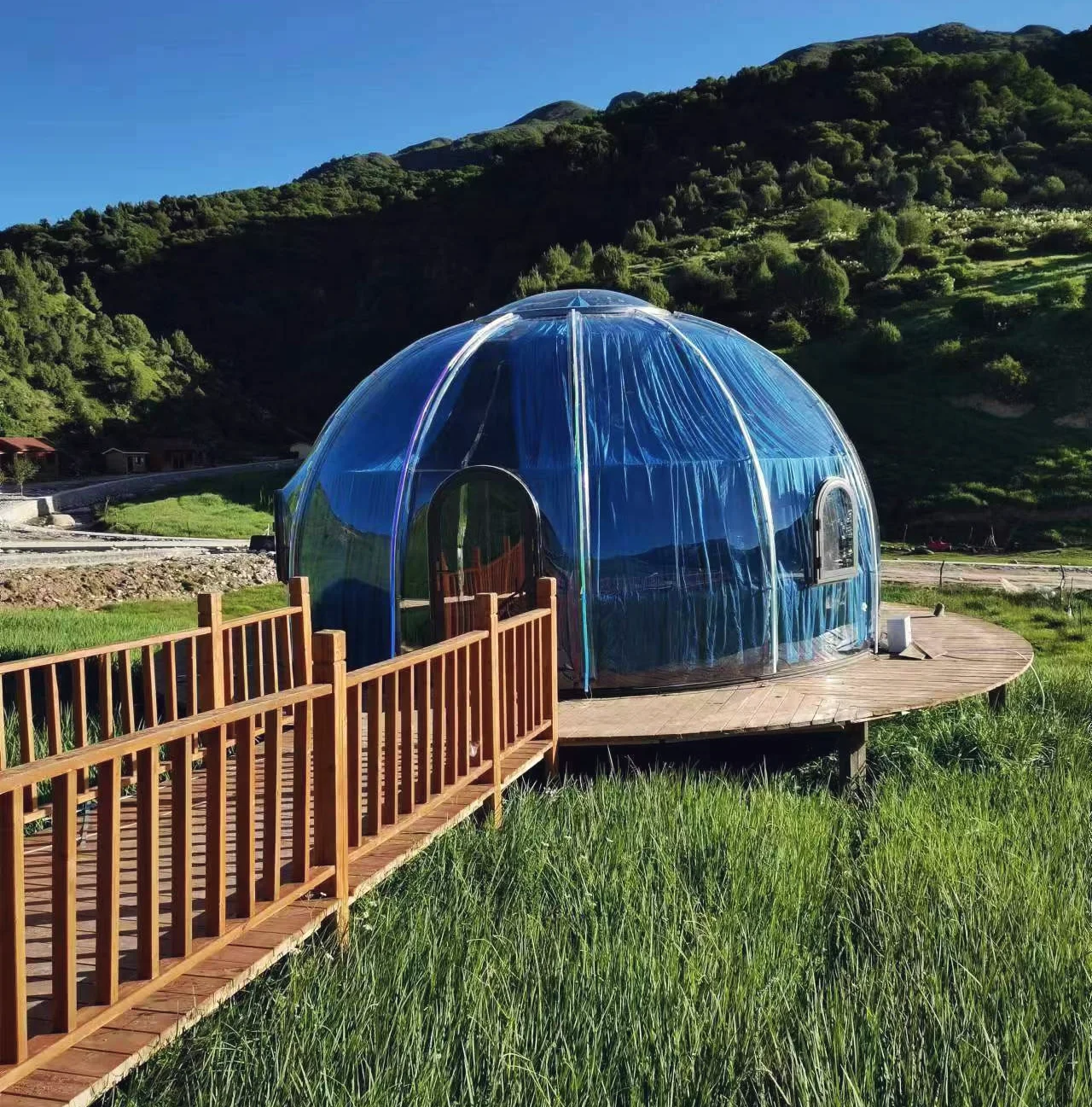
Check the Guest Experience Before Choosing a Shell
For a sleeping room, test the bed layout, privacy, glare, night-time reflections and condensation. The absence of a structural blower removes one equipment requirement; it does not make a rigid dome soundproof. Ask how fresh air is supplied with doors closed and where fans or air-conditioning equipment will sit.
Domevora’s published models use solid polycarbonate. A twin-wall greenhouse sheet specification is not evidence of a twin-wall Domevora accommodation option. A material temperature range also does not predict room temperature. Plan the opening season with local weather, solar exposure, occupancy, HVAC capacity and ventilation in view.
For optical performance, compare the actual material grade, UV protection, cleaning instructions and written warranty. Photos taken on delivery do not demonstrate long-term clarity. The maintenance guide covers the cleaning and inspection questions to include in the order.
Compare Costs on the Same Basis
Use quotations for the same diameter, included equipment, delivery destination and intended opening months. Domevora’s published price guide distinguishes shell-only and configured kits and states its EX-WORKS basis. Obtain a current written quotation before budgeting; a shell price is not a completed glamping-room price. To see how a delivered retail price and an EX-WORKS price differ in practice, read our Domevora vs Hypedome comparison.
| Cost to compare | Information needed |
|---|---|
| Equipment | Shell or membrane, connections, door, windows, curtains, lights and any blower |
| Delivery and installation | Packing, freight, unloading, tax, site access, platform, anchors and local labour |
| Energy | Blower and HVAC power, running hours and the local electricity tariff |
| Upkeep | Cleaning, service access, spare parts, repair labour and component warranty exclusions |
| Commercial fit-out | Furniture, privacy, electrical work, bathrooms, fire precautions and permits |
For continuously running equipment, annual electricity use is power in kW × operating hours per year. Multiply by the local tariff to estimate cost. Replacement and HVAC costs require supplier information and a site design; no five-year savings or payback is established by a shell comparison alone.
Documents for Commercial Use
Ask both suppliers for a drawing of the supplied configuration, material documentation, anchoring details, operating limits and written warranty. Factory quality-system certificates, material fire tests and structural calculations answer different questions. Check their scope, issuer and applicability to your order with the local design team.
For Domevora, use the wind and snow review checklist and engineering document guide to frame the request. A material test or brochure reference does not approve an installed guest room. Confirm planning, fire, egress and insurance requirements locally.
Which Option Fits Your Project?
A rigid dome is worth evaluating when eliminating continuous inflation, maintaining a fixed layout and obtaining replacement panels are priorities. A blower-supported bubble may fit a temporary concept where the supplier’s operating limits, power provision and service arrangements suit the venue. Compare the exact products before choosing either for year-round accommodation.
Send the destination, opening months, unit count, bed layout and site conditions through the commercial enquiry form. Request a model direction, scope list and evidence requirements with the quotation.